Electromechanical Actuation
A hybrid stepper motor operates as a two-phase synchronous machine under field-oriented control. The control system directly regulates the torque-producing current.
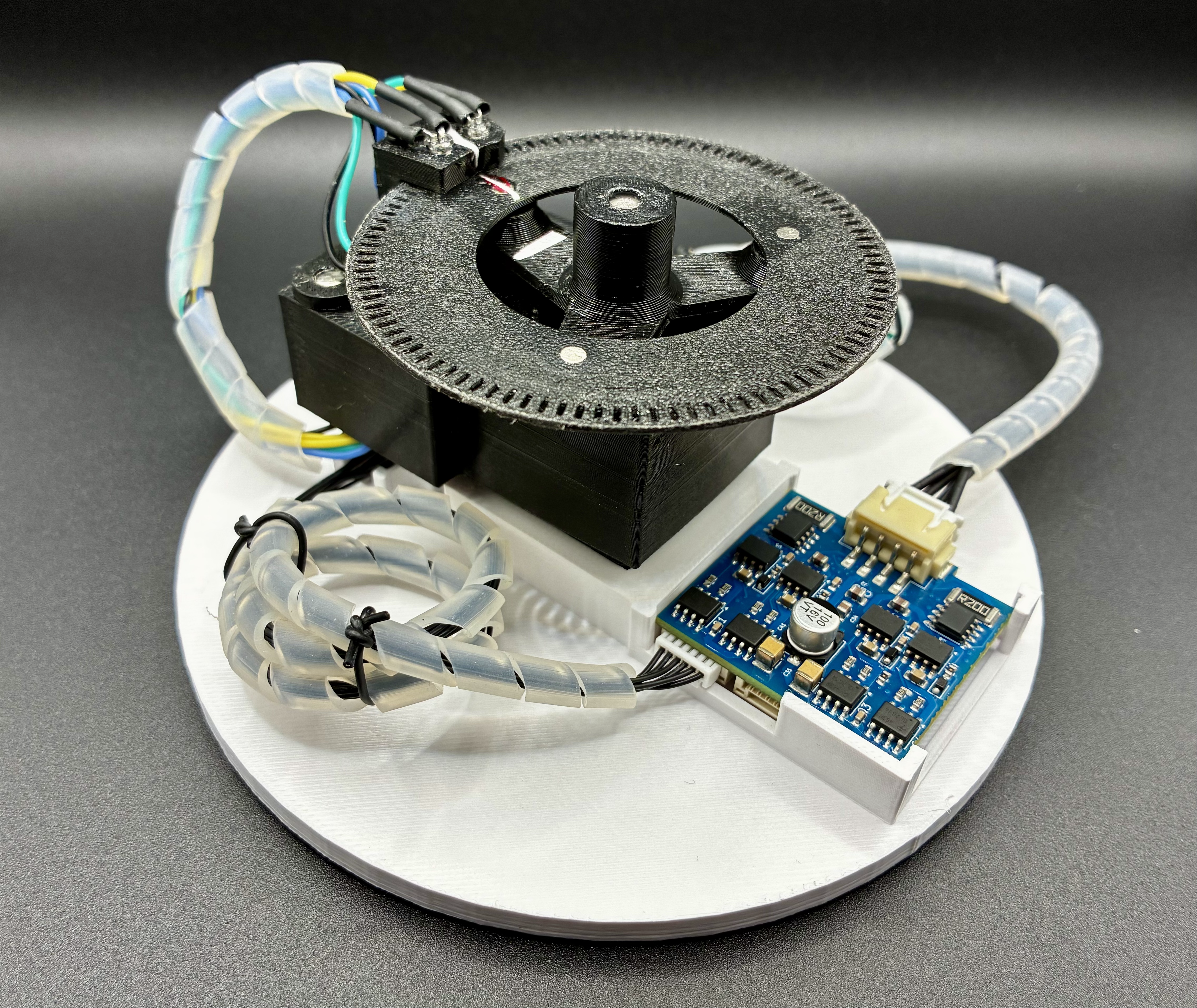
A field-oriented-control actuator combining precision electromechanical actuation, optical angular measurement, FPGA-based control, and calibration into a single integrated system.
If you are interested in purchasing a precision FOC actuator, or would like to discuss a different actuator size, force range, or control configuration, contact us to discuss the requirements.
Contact UsConventional stepper motors often operate as open-loop devices, with position inferred from commanded motion. This actuator combines a hybrid stepper motor with optical angular measurement and closed-loop field-oriented control.
The system continuously measures motor position and phase current while the FPGA executes the control loop. This architecture turns the actuator into a closed-loop precision motion and force-control platform rather than a conventional open-loop stepper.
The actuator integrates the motor, optical sensing, control electronics, and computational infrastructure required for closed-loop precision control.
A hybrid stepper motor operates as a two-phase synchronous machine under field-oriented control. The control system directly regulates the torque-producing current.
An optical encoder provides shaft-angle information directly to the control system. The sensing system combines a characterized optical code disk with a precision analog front end.
FPGA logic executes field-oriented control, position regulation, current regulation, coordinate transforms, calibration lookup, and PWM generation through a deterministic hardware datapath.
The actuator supports multiple control domains through the same underlying electromechanical and computational architecture.
These specifications describe the current actuator architecture and established operating characteristics.
The actuator combines optical position measurement with FPGA control and calibration data. The control system uses the measured behavior of the actuator as part of its operating configuration.
The actuator platform supports different mechanical sizes, force ranges, sensing configurations, and control requirements. Standard configurations provide a starting point for applications that need precision electromechanical actuation.
Customers can also combine actuator geometry, sensing, control electronics, computation, and calibration around a specific application.
If you have a specific actuator application or configuration in mind, contact us to discuss the requirements.